Brain Health’onomy-of-Scale Resolutions
Let’s be honest; New Year Resolutions rarely last despite our very best intentions. Statistics suggest only between 8-17% of New Year Resolutions make it to the end of the resolute month, let alone the year, but also that only 19-24% of people who make New Year Resolutions admit to failing to keep them. That’s not ideal; you don’t want to be chastising and self-shaming for not keeping a potentially over-ambitious resolution which may have been setting you up for failure before the month (let alone 11 months) is out.
So, we need to manage our health resolutions in a more regulated and self-aware way. What we need is a Health Habit Scale. This means setting micro vs. macro aspirations, (for example, simply changing from ‘resolution’ to ‘aspiration’ is far more affirming).
If you think you can manage macro resolutions then great, pursue with motivation and vigour. However, for the majority of us what is likely needed is health’onomies of scale; micro habit modifications over macro promises. This encourages consistency, perseverance and realism; be that in timeframe or scale. The differences may simply include sematic tweaks such as;
Macro: I will go for a run on six days every week.
Micro: I aspire to proactively move my body for 15 minutes every day.
Hopefully you can see that the micro habit does not stipulate a must or a how, but rather a try to, which is far more manageable and flexible. So on the days you do not go for a run you could pick up a set of weights for five minutes, or action a few squats (if mobility permits) every hour during your (seated) day, or choose to use steps rather than an escalator or lift, or disembark public transport a stop earlier than usual to gain a few more steps, or do some spontaneous hoovering, (in my opinion anyone who says hoovering is not exercise has never hoovered properly, the same goes for changing bedding) … you get the idea.
To inspire you to start, here are four further nutritional Brain health micro health’onomies you could try to consistently establish that may slowly-but-surely improve your health, healthspan and Brainspan:
1. Tackle Plastic.
(Especially as we may have enough microplastic in our Brain to form a teaspoon!)
Alter your food storage containers for paper, ceramic, glass (being mindful of drop risk), and swap from using teabags to drinking leaf tea, (the same applies for coffee which I am perplexingly seeing ‘bagged’ with increasing frequency?!). Once the storage item is purchased the habit is easier to form.
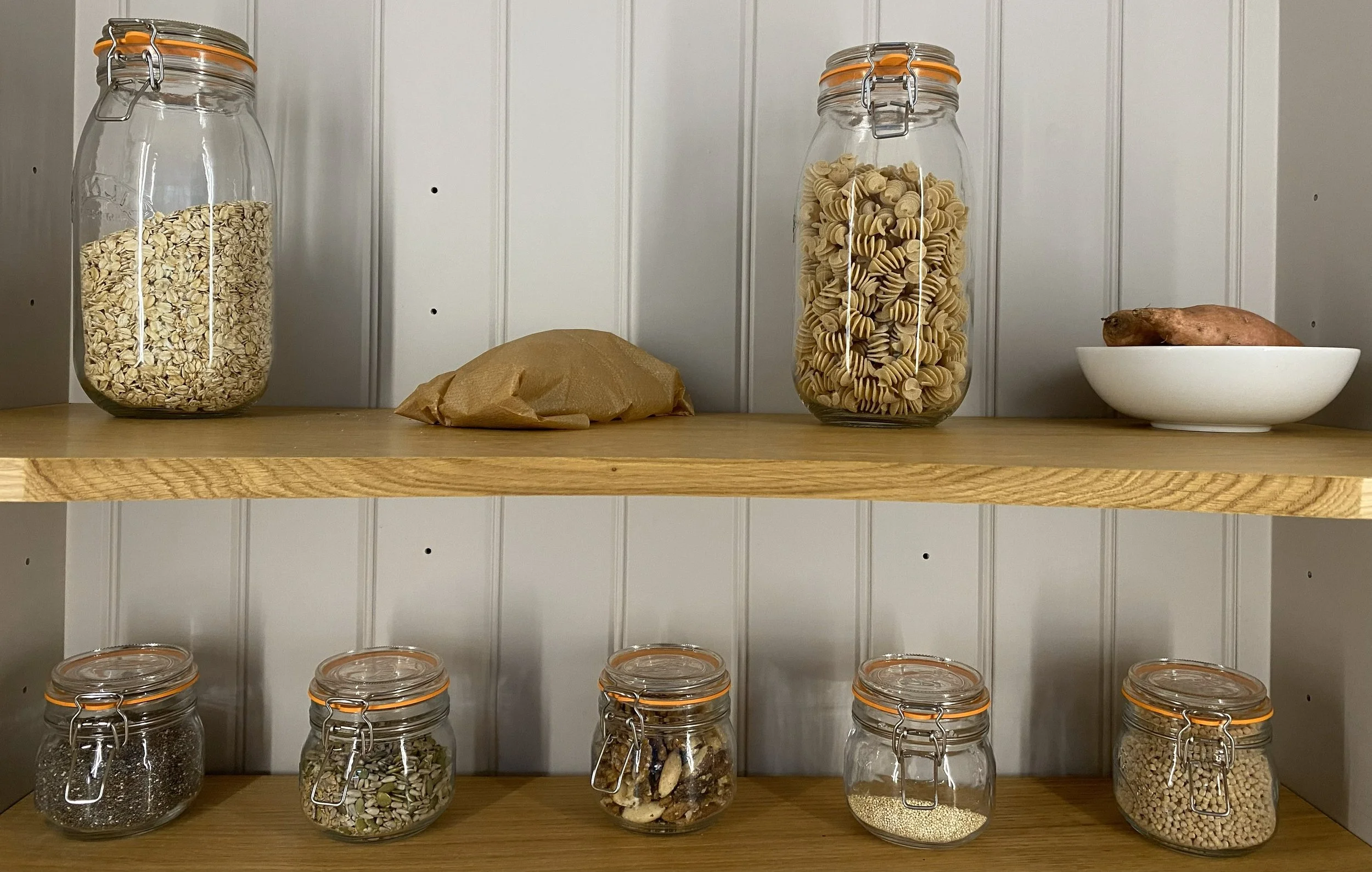
2. Add a palmful of rocket or watercress (essentially a slightly bitter green salad) and/or a dark green leafy vegetable to every meal. It does not matter that salad does not naturally accompany porridge – have a palmful anyway; it’s a decent source of B-Complex Vitamins (and other nutrients) which is beneficial to Brain health & function.
3. Swap one daily ultra-processed carbohydrate for a beneficial fat … plus a more natural carbohydrate if you need a sweeter influence. This sounds much easier than “give up refined sugar” (although if the latter is manageable for you then brilliant – go for it!). This swap can be quite gastronomically interesting and include diverse options such as half an avocado with a few blueberries, a handful of nuts with a few dried berries (be creative; use goji berries or fresh pomegranate), or add a teaspoon of chia seeds, flax seeds, pumpkin seeds and/or extra virgin olive oil to your meals rather than the ultra-processed ‘dressings’ food is so often coated with in an attempt to make it (allegedly) tastier.
4. Sleep. Oft’ strived for, but rarely do we achieve enough (in time or quality). Make one modification to your sleep routine and see if it helps. If not, swap or layer your changes. Examples include: stop drinking caffeine at least six hours before you go to bed, stop looking at screens at least two hours before you go to bed (there’s nothing wrong with reading a book, have a warm bath/shower an hour before you go to bed, journal in your own handwriting for five minutes before you go to bed, invest in an Air Purifier for your bedroom, (I use this one and as well as my sleep quality it has supported my Eczema-prone skin), invest in black out blinds and/or a comfortable unscented eye mask.
Please note that these are just a few general recommendations; they are not personalised and they are not tailored to include recommendations for any existing health imbalances or medical conditions. In these cases, if you have a health or medical condition that needs specific nutritional management and requirements, please consult a medical professional and/or a Nutritionist/Dietician expert.
I hope these micro health’onomies help you realise your New Year aspirations. In the meantime, don’t forget Eat, Drink, Think Nutrition and spare a thought (no pun intended) for your Brain health. Losing your Brain power can be even more devastating to you and those around you than losing an aspect of your physical health, so why wouldn’t you start to look after your Brain right away since diet and lifestyle modifications actioned NOW could save a lot of distress and heartbreak later in life.
REMEMBER: if you are taking any medications always consult a Registered Nutritional Therapist as well as your Doctor before making significant dietary or lifestyle changes. This blog post is written for educational purposes only and in reference to ‘food’. It is NOT advocating taking dietary supplements. It is very important to please always consult a Registered Nutritional Therapist or your Doctor before introducing any dietary supplements into your health regime as these qualified professionals will be able to offer personalised recommendations.
If Brain, cognitive and/or memory are issues which you are struggling with and you want to discover the inspiring & sustainable diet & lifestyle programmes offered by Nutritional Therapy, get in touch via the Contact Me page on this website, or directly on info@eatdrinkthinknutrition.co.uk for more information about 1:2:1 Consultations with Eat Drink Think Nutrition®.
—————
REFERENCES:
https://www.forbes.com/health/mind/new-year-resolutions-survey-2024/
https://yougov.co.uk/society/articles/53756-what-new-years-resolutions-are-britons-making-for-2026
https://yougov.co.uk/society/articles/51150-what-new-years-resolutions-are-britons-making-for-2025
https://www.nature.com/articles/s41591-024-03453-1